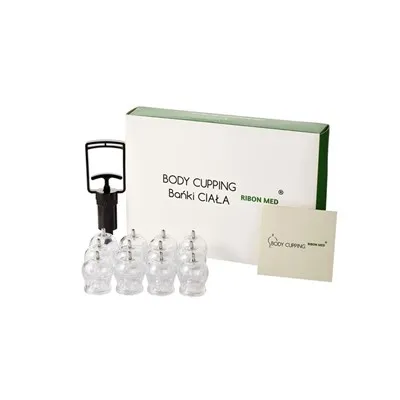
The reason cupping therapy has been used in traditional Chinese medicine (TCM) clinical practice and health preservation for so long stems from its profound functional basis. This basis integrates traditional medical theoretical explanations with mutual verification of modern physiological mechanisms, forming a multi-dimensional scientific connotation.
From the perspective of TCM theoretical system, the functional basis of cupping is primarily the theory of meridians and the theory of Qi and blood. Meridians are considered the pathways for the flow of Qi and blood, connecting the internal organs and limbs, while acupoints are the sites where Qi is infused onto the body surface. Cupping, by creating negative pressure along specific meridian pathways or at acupoints, stimulates the flow of Qi, regulates the Yin-Yang balance of the internal organs, and achieves the purpose of unblocking meridians, promoting Qi and blood circulation. The intervention of the theory of Qi and blood further clarifies its essential effect-negative pressure stimulation can promote the flow of Qi and blood, resolve stagnation, nourish muscles and joints, thereby improving pain, numbness, and functional limitations caused by poor Qi and blood circulation.
The physical effects of cupping constitute another important dimension of its functional basis. Negative pressure suction dilates local capillaries, inducing congestion and reabsorption, accelerating the clearance of tissue metabolic products, promoting the dissipation of inflammatory factors, and improving microcirculation and oxygen delivery. This mechano-hemodynamic effect provides direct physiological support for analgesia and tissue repair. Some cupping methods are accompanied by a warming effect, which can warm and unblock meridians, dispel cold and dampness, and enhance the intervention ability for cold-dampness obstruction-related diseases. Modern research has also found that negative pressure stimulation can promote the release of endogenous substances such as endorphins with analgesic and mood-regulating effects, and inhibit some pro-inflammatory signaling pathways, thus confirming its regulatory function at the molecular level.
The overall regulatory function of cupping is also worth noting. Its effects are not limited to the treated area, but rather achieve multi-system synergistic adjustment through the interaction of meridian networks and neuro-endocrine-immune networks. For example, in the treatment of gastrointestinal dysfunction, cupping of back-shu points and related abdominal acupoints can affect autonomic nerve tension and digestive gland secretion; in the improvement of sub-health conditions, it manifests as a proper balance between immune function and stress response.
Therefore, it is evident that the functional basis of cupping is founded on the holistic view of traditional Chinese medicine and the theory of meridians and qi and blood, and is extended and verified through clear physical and physiological mechanisms. This complex functional system enables it to exert a direct effect on specific symptoms, while also promoting the body's homeostasis and recovery at a macroscopic level, providing a solid theoretical and scientific basis for its widespread clinical application.