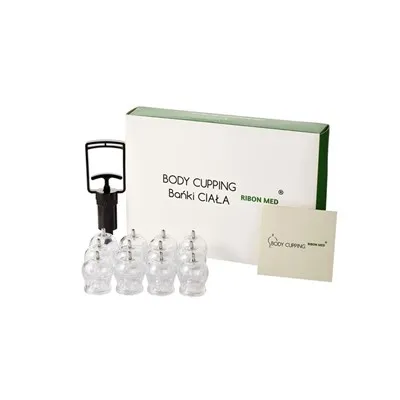
Rubber cupping products use flexible cup materials to create suction during cupping therapy. This category includes natural rubber cupping sets and rubber-glass suction cups in different sizes and configurations for body, limb and facial applications.
Product Overview
Industrial rubber suction cups are vacuum gripping components used as the interface between automated handling systems and workpieces. They are designed for pick-and-place, transfer, positioning, and loading operations in robotic, pneumatic, and vacuum handling equipment.
Different cup geometries, elastomer compounds, sealing profiles, and connection configurations are available to accommodate variations in workpiece weight, surface condition, shape, temperature, and handling requirements.
Standard configurations cover general industrial handling, while application-specific options can be specified for oily surfaces, elevated temperatures, static-control requirements, and sensitive substrates.
-
![Natural Rubber Suction Cupping Therapy Set]() Natural Rubber Suction Cupping Therapy Set
Made of natural rubber, this four-size umbrella-shaped cupping set is deformation-resistant, portable, easy to use, and conforms to the body parts, making it suitable for traditional Chinese...
-
![Rubber Suction Massage Cupping Cups]() Rubber Suction Massage Cupping Cups
Combining rubber and glass materials, this five-size cupping set offers a longer lifespan and better suction, suitable for cupping on the body, limbs, and face.


Rubber Cupping Sets for Different Therapy Applications
Rubber cupping products are available in different materials, sizes and set configurations. The products in this category include natural rubber cupping sets and rubber suction massage cups combining rubber and glass materials.
Natural Rubber Cupping Sets
The Natural Rubber Suction Cupping Therapy Set is made of natural rubber and includes four cup sizes. Its umbrella-shaped design is described as deformation-resistant, portable and easy to use, with a shape that conforms to different body parts.
Rubber Suction Massage Cupping Cups
The Rubber Suction Massage Cupping Cups combine rubber and glass materials and are available in five sizes. The product is designed for cupping on the body, limbs and face, with the product description highlighting its longer service life and suction performance.
Choosing a Rubber Cupping Product
For B2B purchasing, the main points to compare include the cup material, number of sizes, set configuration and intended application. Buyers can review the individual product pages to check the specific configuration of each model before requesting samples, quotations or customized packaging.
When comparing products, consider:
1. Cup material
2. Available cup sizes
3. Set configuration
4. Intended application
5. Packaging requirements
6. OEM or private-label requirements
Key Features
Flat and Bellows Geometries:
Flat, single-bellows, and multi-stage bellows designs are available for different workpiece shapes, height variations, and movement requirements.
Flexible Sealing Lips:
Molded sealing edges are designed to conform to suitable workpiece surfaces and establish a vacuum seal with the available vacuum system.
Multiple Connection Options:
Internal or external threaded connections, stems, and molded-in metal inserts can be configured to match different vacuum circuits and mounting arrangements.
Compound Selection:
NBR, silicone, FKM, EPDM, natural rubber, and PU options are available according to temperature, oil exposure, surface interaction, and other operating conditions.
Application-Specific Surface Designs:
Smooth surfaces, support structures, and friction-oriented profiles can be selected according to workpiece geometry and handling requirements.
Custom Metal Inserts:
Brass, aluminum, and stainless steel inserts can be incorporated into selected designs where a specific mounting interface is required.
Technical Specifications
|
Parameter |
Specification Details |
|
Material Options |
NBR, Silicone, FKM, EPDM, Natural Rubber, PU |
|
Hardness Range |
Typically specified within the required Shore A range (+/- 5 deg) |
|
Operating Temperature |
Compound- and application-dependent (-40 deg C to +250 deg C) |
|
Cup Diameter |
Available in multiple sizes according to cup design (2 mm to 300 mm) |
|
Connection Types |
Internal/external threads (G1/8, G1/4, NPT), stems, and customized fittings |
|
Cup Geometry |
Flat, single bellows, multi-stage bellows, and application-specific designs |
|
Surface Profile |
Smooth, support-structured, or friction-oriented profiles |
|
Metal Insert Options |
Brass, aluminum, stainless steel, according to design |
|
Compliance Options |
RoHS and REACH documentation available where applicable; specified silicone grades can be supplied for applications requiring relevant regulatory documentation (FDA compliant) |
Product Selection Guide
Selecting a suitable suction cup depends on the workpiece, vacuum system, operating environment, and handling motion.
Workpiece Surface: Smooth, textured, curved, porous, oily, coated, or sensitive surfaces.
Workpiece Shape: Flat, curved, irregular, recessed, or uneven geometries.
Workpiece Weight: Determines the required gripping area and number of suction cups.
Material: Select the elastomer according to temperature, oil, chemical exposure, and surface requirements.
Cup Geometry: Flat cups for suitable flat surfaces; bellows designs for height variation, angular compensation, or uneven surfaces.
Vacuum Level: Match the cup design and sealing characteristics to the available vacuum system.
Handling Speed: Higher acceleration and dynamic movement may require additional gripping points or suitable cup geometry.
Connection: Select threads, stems, or fittings according to the vacuum circuit and mounting interface.
Temperature: Select the compound according to the actual operating and cleaning temperatures.
Surface Sensitivity: Consider low-marking, low-migration, ESD-control, or other application-specific material requirements.

Automotive Manufacturing: Handling of metal stampings, glass components, trim parts, and other suitable workpieces during transfer and positioning operations. Oil-resistant compounds can be selected for applications involving oily metal surfaces.
Packaging Machinery: Pick-and-place and transfer of cartons, flexible packaging, wrapped products, and other suitable packaging materials. Cup geometry should be selected according to surface stiffness and porosity.
Electronics Assembly: Handling of electronic housings, panels, boards, and other components requiring controlled contact conditions. ESD-control configurations can be specified where static-control requirements apply.
Glass and Panel Handling: Transfer and positioning of suitable glass, coated panels, and composite sheets using cup geometries selected for the workpiece surface and curvature.
Woodworking and Furniture Production: Handling of MDF, timber panels, laminated boards, and finished surfaces where the workpiece characteristics are compatible with vacuum gripping.
Manufacturing and Quality Control
Elastomer Compounding:
Rubber compounds are prepared according to specified material formulations and application requirements. Batch identification can be maintained for production traceability where required.
Compression and Injection Molding:
Molded suction cups are produced using controlled molding processes selected according to compound and product geometry.
Post-Curing:
Selected silicone and other applicable compounds can undergo post-curing where required by the material specification and product application.
Dimensional Inspection:
Critical dimensions such as cup diameter, sealing-lip geometry, connection dimensions, and molded profiles are inspected against approved product drawings and specifications.
Mechanical and Vacuum Testing:
Product testing can include hardness, tensile properties, sealing performance, leakage characteristics, and fitting integrity according to the applicable product specification.
Batch Documentation:
Material and inspection records can be maintained according to product and order requirements.
Custom suction cups can be developed for applications where standard catalog configurations do not match the workpiece or vacuum system.
Custom Geometry: Cup diameter, lip profile, bellows structure, internal support features, and contact geometry can be developed according to application requirements.
Custom Compounds: Elastomer selection can be adapted for oil exposure, temperature, chemical resistance, static-control requirements, low-marking requirements, or other specified conditions.
Customized Connections: Thread specifications, stem dimensions, metal inserts, and mounting interfaces can be configured according to the customer's vacuum circuit.
Prototype Development: CAD drawings and technical requirements can be reviewed before tooling confirmation. Prototype and production lead times depend on product geometry, tooling complexity, material selection, and order requirements.
Private Label and OEM Supply: Product identification, packaging, and other OEM requirements can be discussed according to order specifications.

Packaging and Delivery
Packaging:
Suction cups are packaged to protect sealing lips, molded surfaces, and connection components during storage and transportation. Packaging configurations can be adapted for standard, bulk, or application-specific orders.
Product Identification:
Model, material, size, or batch information can be provided according to product and order requirements.
Shipping:
Standard and customized orders can be arranged for air or sea transportation according to quantity, destination, and delivery requirements.
Documentation:
Applicable product specifications, inspection records, material documentation, and compliance statements can be supplied according to the order and product configuration.
FAQ
We're well-known as one of the leading rubber cupping manufacturers and suppliers in China, specialized in providing high quality customized products. We warmly welcome you to wholesale durable rubber cupping in stock here from our factory.
rubber cupping body, Rubber Suction Massage Cupping Cups, Natural Rubber Suction Cupping Therapy Set