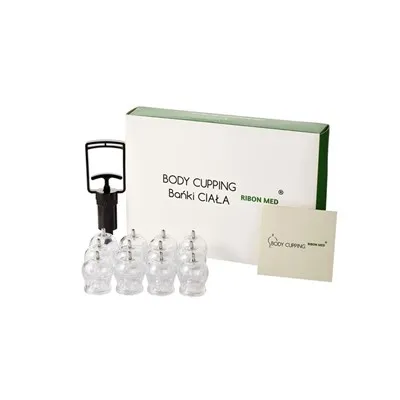
As an important component of external therapies in Traditional Chinese Medicine (TCM), cupping demonstrates diverse applications in clinical practice and health management due to its unique mechanism of action and wide range of applicability. Its core principle lies in applying negative pressure within the cup to specific areas of the body surface, stimulating the flow of Qi and blood through the meridians, regulating organ function, and thus achieving a comprehensive effect combining prevention and treatment.
In pain management, cupping is commonly used for various soft tissue injuries and chronic strain-related diseases. For soreness, stiffness, and limited mobility caused by conditions such as cervical and shoulder syndrome, lumbar myofascitis, and knee degenerative diseases, cupping can promote the metabolism of inflammatory mediators, relieve muscle spasms, and improve local circulation through local hyperemia and meridian conduction, thereby reducing pain and improving mobility. For joint pain caused by wind-cold-dampness invasion, the warming and dispersing effects of cupping are particularly significant, and it is often used in combination with moxibustion and massage to enhance efficacy.
Cupping also has applications in the adjunctive management of common symptoms in the respiratory and digestive systems. For example, in the early stages of a cold accompanied by chills, nasal congestion, and general malaise, cupping at acupoints such as Dazhui (GV14) and Fengmen (BL12) can help dispel external pathogens and clear the lungs and nasal passages. For gastrointestinal disorders causing abdominal distension and loss of appetite, cupping at acupoints such as Zhongwan (CV12) and Tianshu (ST25) on the abdomen and related back-shu points can regulate qi, harmonize the stomach, and promote digestion. Furthermore, for sub-health conditions such as fatigue, sleep disorders, and weakened immunity, cupping helps restore bodily balance and enhance overall disease resistance by regulating autonomic nerve function and endocrine levels.
Modern research also provides evidence for the uses of cupping: negative pressure stimulation can promote the release of analgesic substances such as endorphins in local tissues and inhibit inflammatory signaling pathways; imaging observations show increased blood perfusion in related meridian areas after cupping, suggesting its effect on improving microcirculation and the metabolic environment. It is important to note that while cupping has a wide range of uses, it is crucial to select acupoints based on syndrome differentiation, control the cupping time and suction intensity, and use it with caution or avoid it altogether for special populations such as those with sensitive skin, bleeding tendencies, pregnant women, and those with lumbosacral acupoints to ensure safety and effectiveness. In summary, cupping, with its simplicity, convenience, affordability, and effectiveness, has stable applications in pain rehabilitation, respiratory and digestive regulation, and sub-health intervention. It embodies the advantages of traditional Chinese medicine's holistic view and individualized treatment, and deserves to be promoted and applied under professional guidance.