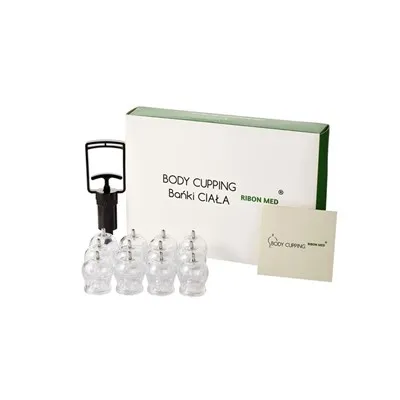
As a long-standing external treatment technique in Traditional Chinese Medicine, cupping's performance is reflected in its unique mechanism of action, stable stimulation method, and wide range of applications. A deeper understanding of these characteristics helps to more accurately leverage its efficacy in clinical practice and health management.
The primary performance characteristic of cupping lies in the directionality and controllability of physical stimulation. Through the negative pressure adhering to the body surface, the cups apply continuous mechanical traction to the local skin and superficial tissues within a certain range, promoting capillary dilation and forming local congestion or mild ecchymosis. This process accelerates the clearance of metabolic products and inflammatory mediators, improves microcirculation and tissue oxygen supply, thus creating favorable conditions for pain relief and functional recovery. The intensity of negative pressure and the duration of cupping can be adjusted according to the treatment site, the patient's constitution, and the condition, demonstrating a high degree of operational controllability.
Secondly, cupping has excellent meridian conduction properties. According to the theory of meridians in Traditional Chinese Medicine, when the cups are applied to specific acupoints or related areas, the stimulation signals can be transmitted to the corresponding internal organs through the meridian system, triggering a synergistic adjustment of overall function. This localized-to-holistic effect allows cupping not only to alleviate local symptoms but also, to some extent, to improve visceral dysfunction related to meridians, such as poor gastrointestinal function and impaired lung function, demonstrating its cross-systemic regulatory advantages.
Cupping also excels in its warming properties. Especially in traditional fire cupping, the heat generated by combustion penetrates the skin under negative pressure, warming the meridians, dispelling cold, and clearing dampness. The combination of heat and negative pressure enhances its effectiveness in treating conditions such as cold-dampness obstruction and insufficient Yang Qi. Modern observations have also confirmed that increased local blood flow and skin temperature after cupping indicate that its thermal effect and blood flow improvement can be quantified.
Furthermore, cupping offers good safety and repeatability. Under standardized procedures, the incidence of adverse reactions is low, and the same treatment regimen maintains a relatively stable trend across different individuals or courses, facilitating efficacy evaluation and regimen optimization. Its simple instrument structure, stable performance, and ease of standardization make it suitable for application in various medical and healthcare settings.
Overall, cupping possesses a unique performance system due to its directional and controllable physical stimulation, integrated regulation of meridian conduction, synergistic effect of heat, and good safety and repeatability. These properties not only support its widespread application in pain management, chronic disease management, and sub-health intervention, but also provide a solid technical foundation for modern research and clinical practice.