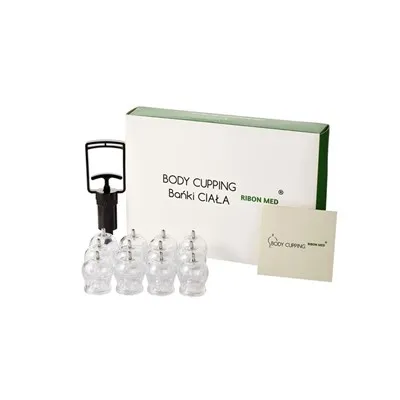
As a typical representative of external treatment methods in Traditional Chinese Medicine (TCM), cupping therapy, with its unique physical effects and holistic regulatory philosophy, has been refined over thousands of years and continues to play an important role in the health field. It stimulates the flow of Qi and blood in the meridians by applying negative pressure to acupoints or specific areas on the body surface, achieving effects such as clearing the meridians, dispelling cold and dampness, and promoting Qi and blood circulation. It is a treasure in the Chinese traditional medicine treasury, possessing both practicality and cultural depth.
The core mechanism of cupping originates from the TCM theories of "Qi and Blood Theory" and "Meridian Theory." When the cups adhere to the skin, creating local negative pressure, it can promote the dilation or even slight rupture of capillaries, triggering a benign reaction of "congestion-stasis-absorption," accelerating the excretion of local metabolic products. Simultaneously, this stimulation can be transmitted along the meridians to the internal organs, regulating the functions of the corresponding systems. In clinical applications, cupping is remarkably effective for chronic pain conditions such as neck, shoulder, back, and leg pain, joint stiffness, and lumbar strain caused by wind, cold, and dampness. It is also commonly used to relieve nasal congestion and headaches in the early stages of a cold, abdominal distension and discomfort caused by gastrointestinal dysfunction, and to help improve fatigue and weakness in a sub-healthy state.
With the advancement of modern research, the scientific basis of cupping has been gradually validated. Experiments show that its negative pressure stimulation can promote the release of analgesic substances such as endorphins in local tissues and inhibit the spread of inflammatory factors. Infrared thermal imaging technology shows that the temperature of the corresponding meridian pathways increases after cupping, indicating improved blood and qi circulation efficiency. These findings provide objective evidence for its clinical application and promote the standardized development of the therapy-from traditional animal horn and bamboo tubes to modern improved air cupping and suction cupping, tool iteration has improved operational safety and applicability while retaining the core principles.
It is worth noting that cupping should be performed according to individual principles. Caution should be exercised when using cupping on areas such as the lumbosacral region, in individuals with weak constitutions, broken skin, coagulation disorders, and pregnant women. The duration of cupping and the intensity of suction should be adjusted according to age and condition to avoid overstimulation. Professional diagnosis and standardized procedures are crucial for ensuring both efficacy and safety.
From folk remedies to a systematic therapy, cupping not only vividly embodies the traditional Chinese medicine concept of "preventive treatment," but also serves as a vital link between traditional wisdom and modern health needs due to its simplicity, convenience, affordability, and effectiveness. Against the backdrop of the Healthy China strategy, further exploring its scientific connotations and improving application standards will inject new vitality into the contemporary transformation of traditional medicine.